


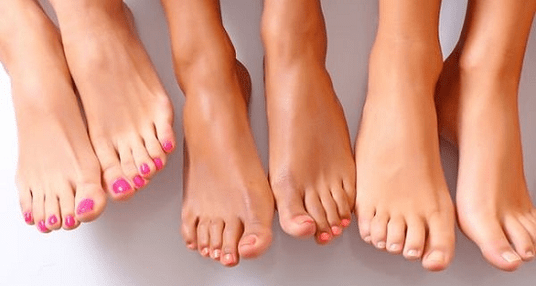
Medical sources claim that almost one in five people has or has had a disease such as foot fungus.This disease is known to almost the entire planet.The disease emerged in the 19th century and, since then, has continued to expand its limits.The fungus affects the feet due to wearing leather shoes of different quality.There are many types of diseases.Damage to toenails, the skin between the toes, and on the feet is common.
Diseases caused by parasitic microorganisms are called mycoses or onychomycoses.Doctors believe that people with neglected feet are more susceptible to getting them than others: with calluses, cracked heels, calluses.Peeling or dry skin is also considered one of the main causes of foot infections.There are many varieties of mycoses, because in nature there are several hundred fungal pathogens that can parasitize the human body.The most common are: dermatophytes, yeast and mold parasites.
Many people wonder how to recognize the fungus in the early stages, during the period when painful symptoms appear, and what to do so that the insidious disease quickly disappears.There are many answers to the question.
Symptoms of the disease
The medical name for foot fungus is ringworm.The causative agent is believed to be a parasitic virus called a fungus.It tries to settle in the crevices of the feet, between the toes, over and under the nails.The disease is aided by sweat, through which it enlarges the halo of its development on the legs.Any damage to the skin is susceptible to fungus.
The disease destroys keratin, responsible for the healthy state of nails.The skin has a layer of fat, improper metabolism and lack of balanced nutrition lead to skin diseases.The fungus enters and problems appear.Restoring the skin's protective function requires time and a specific treatment system.
Fungus forms
Doctors have identified four forms of ringworm.
- Interdigital.The first most common type of disease.Its outbreaks are observed in summer.The higher the temperature, the greater the number of sick people registered by doctors.Cracks and sores that appear between your fingers can be dry or wet.There is constant itching.In the photo it is easy to see the appearance of the interdigital form of the disease.
- External.The skin of the foot below becomes covered with a callus-like crust.This is especially visible in the photo in the heel area, which is covered in cracks.Nails lose their normal appearance.They change color, shape and begin to grow incorrectly.It's difficult to treat.
- Vesicular.The disease covers the skin from the leg to the ankle.Remember, clearly visible in the photo, erosion.Ulcers penetrate deeply into the body and require treatment prescribed by specialists, strictly following doctors' prescriptions and requirements.
- Off.The skin of the foot resembles a surface sprinkled with flour.The cracks are almost invisible.This form is difficult to see in time.Only careful attention to the condition of the legs and the desire to maintain their healthy appearance lead to the timely start of treatment.
There are many varieties of the disease, each of which has its own symptoms and manifestations of the disease.You can see them in the photo, having studied the signs and differences of each type.
- The fungal infection does not appear on both legs at the same time.First it can be found on one leg, then on the other.The first symptoms are itching and peeling.On the skin, at the site of infection, you can see or touch blisters.If treatment is not started on time, they will turn into erosion and change their appearance.An unpleasant crust will appear between your fingers.Gradually, nail fungus begins to spread down the leg, the first thing it affects is the nails.At first you may notice yellow stripes and spots, then the nails change shape and start to become thick.Nail layers increase.The nail crumbles and loses strength.
- Different types of diseases behave differently.There is a type of fungus (dermatophyte) that does not present symptoms.And the disease immediately appears on the skin and nails.Urgent medical intervention is required.
- There are variants of the reverse course of the disease.The usual manifestation of the disease changes from the inside out.The disease goes from the surface to the nail, the plate becomes light and peels off.The nail becomes strangely white.
- The feet are covered in ulcers.They are small and yellow in color.Inflammation appears in the place where the nail grows.The color becomes green, close to brown.The nail is quickly destroyed.These are signs of a species of yeast.
- You can check for the presence of such a type as rubromycosis using potassium permanganate.Healthy nails will change color with the solution and turn brown.Nails affected by the disease do not change color.The skin is also exposed to this type of virus.
Nail fungus
The disease very often occurs in people who play sports, are bright and active.They visit swimming pools, sports health centers and saunas.Someone else's shoes, barefoot on a surface that has not been treated after the previous visitor, leads to the appearance of nail fungus.The disease is infectious, it is transmitted from a sick person to a healthy person through contact with things or shoes.It is always recommended to bring your own shoes, even when visiting places where footwear is shared.Families where personal hygiene comes first show excellent results.Each family member has their own towel and slippers.Towels for the face and feet and constantly changing bed linen prevent the appearance of an unpleasant parasite on the feet.Nail fungus can be caused by injuries to the feet, especially from tight shoes, excessive sweating, and flat feet.
Medical reasons
- Low and weak immunity;
- Diabetes mellitus;
- Constant treatment with antibiotics;
- Inadequate blood circulation in the legs;
- Features of the structure of the limbs.
Signs of nail fungus
- Change of structure;
- Color change (white, gray, yellow, green, brown);
- Increase the thickness of the nail plate;
- Cracked nails;
- Unpleasant odor;
- The nail plate begins to crumble.
The parasitic microbe settles in the space between the nail and the base.The nail is higher than normal.The sore spot looks unpleasant, aesthetically ugly, protrudes unnaturally and becomes large.
Preventive procedures
- Complete cleaning of common areas.Bathrooms and toilets must be treated with disinfectants.Treat with products containing bleach, cloths and sponges.
- Use special products to reduce sweating on your feet.These can be powders, talcum powder.
- If a sick person appears in the family, everyone else should take precautions.
- Wear comfortable, high-quality shoes.Avoid the appearance of calluses and injuries.
- Using foot creams.For dry skin - softening, for excessive sweating - refreshing.
- After washing, feet must be dried well
- Before visiting bathhouses, swimming pools, saunas or places where you will need to clean yourself with bare feet or open shoes, treat your feet with antifungal aerosols.The same can be done after going to these facilities.
- Daily change of socks and tights.
- Treatment of the inner surface of shoes, timely drying, care for them.
- Don't try on other people's shoes.
A person suffering from this disease begins to experience a lot of inconvenience.They are associated with changes in the appearance of nails, physical illnesses and unpleasant sensations.It is not recommended to start the disease.Nail fungus does not stay still, it begins to spread over a larger area and it is possible for the disease to enter the body.It is important to start treatment on time.It must be carried out competently and systematically.